
Cancer treatment is evolving as scientists learn more about the biology of cancer and the immune system. While traditional therapies often focus on directly targeting tumour growth, newer approaches are exploring whether the immune system itself may become part of the strategy.
4 minute read
In brief
- Cancer treatment can involve surgery, radiotherapy, chemotherapy, immunotherapy, or combinations of these approaches.
- Chemotherapy mainly works by interfering with processes involved in rapid cell growth and uncontrolled division.
- Immunotherapy works through the immune system and how it responds to cancer.
- Cancer vaccines are one type of immune based strategy, which may be used for treatment, prevention, or both.
Cancer treatment is not one single approach
Cancer treatment usually involves more than one approach because different therapies address different aspects of the disease. Surgery may be used to remove a tumour, while radiotherapy may be used to target cancer in a specific part of the body. Chemotherapy distributes to cancer cells through the bloodstream, whereas immunotherapy takes a different route by working through the immune system.
These approaches do not compete, but address cancer in different ways and different treatment options may be combined depending on the cancer type, stage of disease, and the individual patient. This article explores how newer immune based approaches, including cancer vaccines, are attracting scientific interest.
How chemotherapy works
Chemotherapy remains one of the most established forms of cancer treatment in both human and veterinary medicine.
At a basic level, chemotherapy works by interfering with processes involved in rapid cell growth and uncontrolled division. Cancer cells often divide more quickly than many normal cells, which is one reason chemotherapy can be effective against some tumours.
However, some healthy cells also divide quickly, including cells in the gut lining, bone marrow, and hair follicles. This helps explain why chemotherapy can also affect normal tissues.
How immunotherapy is different
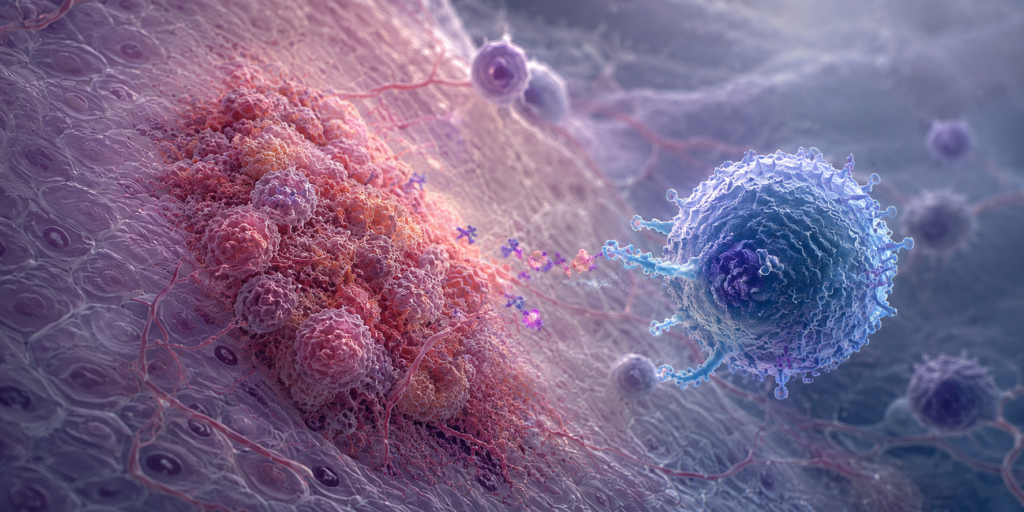
Where chemotherapy mainly acts directly on cancer cells, immunotherapy works by influencing how the immune system responds to cancer.
The immune system is constantly surveying the body for signs of infection, damage, or abnormal behaviour in cells. Cancer presents a difficult problem for the immune system because cancer cells arise from the body’s own tissues and may not appear foreign in the same way as a virus or bacterium.
In some cases, the immune response may be incomplete. In others, the tumour environment itself may weaken or suppress immune activity. Immunotherapy aims to improve this process in different ways, but the central idea is simple: rather than attacking cancer cells directly, immune based strategies help the body’s own defence system recognise and respond to cancer more effectively.
Where cancer vaccines fit
Most people are familiar with vaccines that help protect against infectious diseases, but cancer vaccines are different because they are designed around cancer related targets rather than infectious agents.
Their purpose is to help the immune system recognise antigens associated with cancer cells. In this sense, cancer vaccines can be thought of as a way of guiding the immune system towards what it should look for.
Some cancer vaccine approaches are being explored as treatments for existing cancer. Others may potentially help reduce the risk of cancer developing or returning in certain settings. The role of a cancer vaccine depends on the cancer type, the target, the timing, and the clinical situation. This remains an active and evolving area of oncology research.
Why this matters in canine oncology
Cancer remains a major clinical challenge in dogs, and although existing treatments can provide meaningful benefit in some situations, outcomes still vary considerably between cancer types and between individual dogs. This highlights the ongoing need for new treatment approaches that are both scientifically grounded and clinically responsible.
Cancer vaccines and other immune based approaches are attracting interest because they represent a different way of thinking about cancer treatment. Rather than focusing only on directly damaging tumour cells, they aim to engage the immune system in recognising and responding to cancer.
Looking ahead
Cancer treatment is evolving as scientists learn more about how cancer interacts with the immune system. While many existing therapies focus on directly targeting tumour cells, cancer vaccines and other immune based approaches are exploring whether immune responses may be guided to recognise cancer more effectively. Cancer remains a major challenge in dogs, and there is still a need for additional treatment options. At CaniVax, we are exploring how these emerging approaches may contribute to the future of canine oncology.