
Cancer is not invisible to the immune system. The real question is why it is not always recognised. Immunopeptidomics offers a way to look directly at what cancer cells are showing to the immune system, and what may be going unnoticed.
4 minute read
In brief
- Cancer cells are not invisible. They leave signals that the immune system can detect
- The challenge is not finding cancer, but recognising it correctly
- Immunopeptidomics reveals what cancer cells are actually showing to the immune system
- This changes how we identify targets and design more precise cancer vaccines
The immune system is always watching
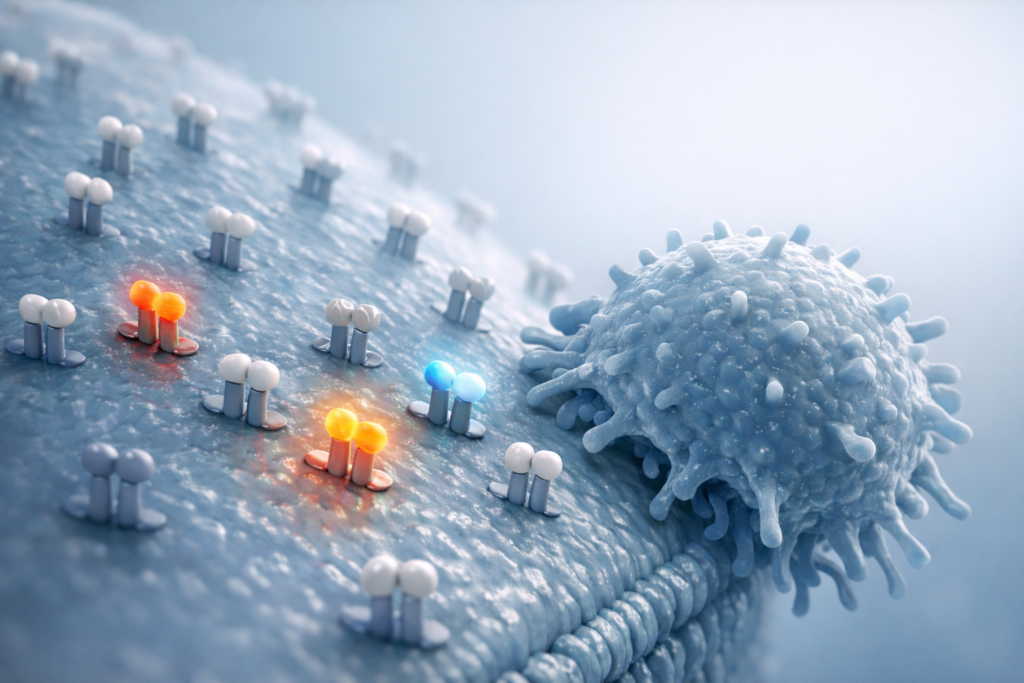
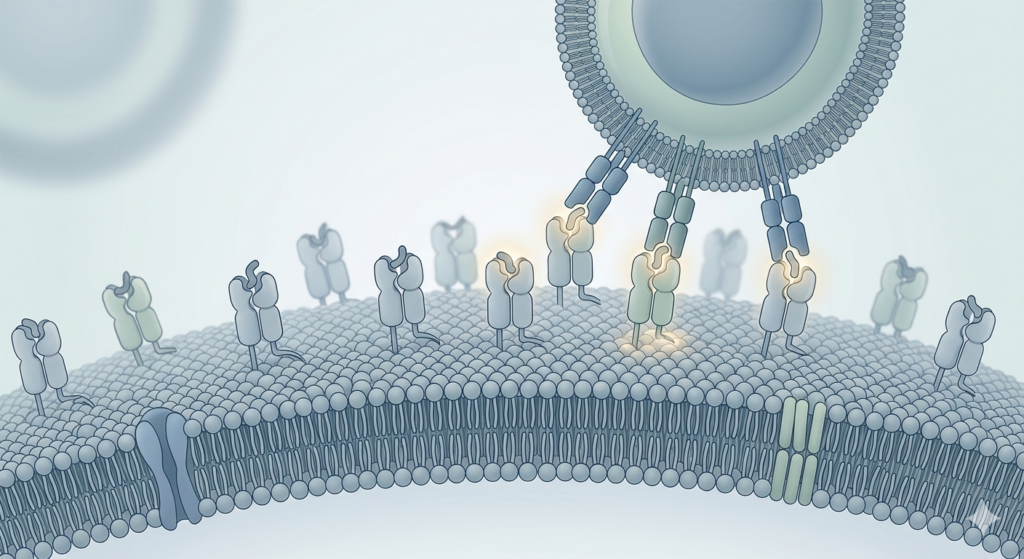
Every cell in a dog’s body displays small fragments of proteins on its surface using molecules known as the Major Histocompatibility Complex.
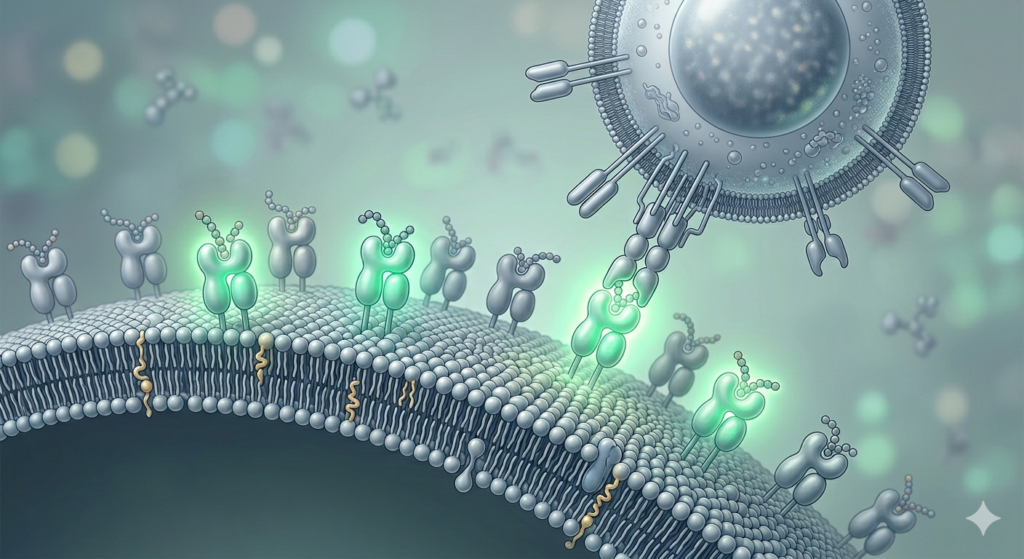
In simple terms, MHC molecules act like display holders. They carry tiny pieces of proteins from inside the cell and present them on the surface for the immune system to inspect.
These fragments, called peptides (short pieces of proteins), act as a snapshot of what is happening inside the cell.
- Healthy cells display normal peptides
- Infected or cancerous cells may display abnormal peptides
Immune cells, particularly T cells, continuously scan these signals. If something looks wrong, the immune system has the potential to act.
What is immunopeptidomics?
Immunopeptidomics is the scientific approach used to identify exactly which peptides are being presented on the surface of cells.
In practical terms, scientists:
- Isolate MHC molecules from tumour samples
- Extract the peptides bound to them
- Identify those peptides using Mass Spectrometry
Mass spectrometry is a laboratory technique that allows scientists to identify molecules based on their weight and structure. It acts like a highly sensitive scanner that can detect and catalogue thousands of peptides at once.
The result is a precise map of what the immune system can actually “see”.
Why this matters in canine cancer
Cancer is not invisible. The challenge is that the immune system does not always recognise it effectively.
Immunopeptidomics allows us to:
- Identify tumour-specific peptides (protein fragments that appear mainly on cancer cells and not normal cells)
- Focus on targets that are naturally presented to the immune system
- Avoid relying on assumptions about what should be visible
This is a critical distinction. Many approaches in cancer research begin with predicted targets. Immunopeptidomics instead starts with what is directly observed on the tumour.
From discovery to vaccine design
Cancer vaccines aim to train the immune system to recognise and attack tumour cells.
For this to work, the selected targets must be:
- Present on the tumour
- Visible to the immune system
- Capable of triggering a meaningful immune response
- Immunopeptidomics helps meet these criteria by identifying peptides that are already being displayed by cancer cells.
This creates a more grounded starting point for vaccine design.
How this fits into our approach
At CaniVax, our focus is on developing pathology-specific cancer vaccines for dogs based on tumour-specific antigens (molecules recognised by the immune system as signals of cancer).
Immunopeptidomics plays a central role in this process:
- It informs which antigens are selected
- It supports the design of pathology-specific vaccines targeting each cancer type
- It strengthens the link between tumour biology and immune recognition
This approach aims to help the dog’s own immune system recognise and fight the cancer, rather than relying on treatments that directly damage cells and can cause side effects.
The cell’s notice board
You can think of each cell as displaying a small “noticeboard” on its surface.
- The peptides are short messages about what is happening inside
- The immune system reads those messages
- Cancer changes the message, but not always in a way the immune system can detect
Immunopeptidomics allows us to read those messages clearly and systematically.
The bigger picture
Understanding what the immune system can see is a fundamental step in developing better cancer treatments.
In canine oncology, there is a growing need for approaches that:
- Support long-term disease control
- Maintain quality of life
- Work with the immune system rather than against it
Immunopeptidomics provides a direct window into immune recognition. It helps move from theory to evidence, and from assumption to observation.
That shift is central to how the next generation of cancer vaccines is being developed.